Vikings in Lithuania
We’ve heard about the Scandinavian Vikings who went West across the Sea to England and Ireland, the Rus who travelled upriver of the Eastern Baltic shores to take root in Kyiv, and even those who made it so far as to become the Varangian Guards of the Emperor in Constantinople.
But what about Vikings in Lithuania?
Well, first we need to address what we mean by ‘Vikings', as this word itself has become synonymous with round-shield toting, braided, Scandinavian warriors, when the term itself actually means more like ‘raider’ or ‘pirate’.
In actual fact, Lithuania had it’s own Vikings, the Curonians.
This tribe inhabited the Baltic shore of modern day Lithuania and Latvia, and were known as one of the most fearsome tribes for their sea-raiding, fighting and strong resistance to the Livonian crusade thanks to their warrior culture.
We have word from Adam of Bremen in 1075:
“... gold is very plentiful there, the horses are of the best. All the houses are full of pagan soothsayers, diviners, and necromancers, who are even arrayed in a monastic habit. Oracular responses are sought there from all parts of the world, especially by Spaniards and Greeks.”
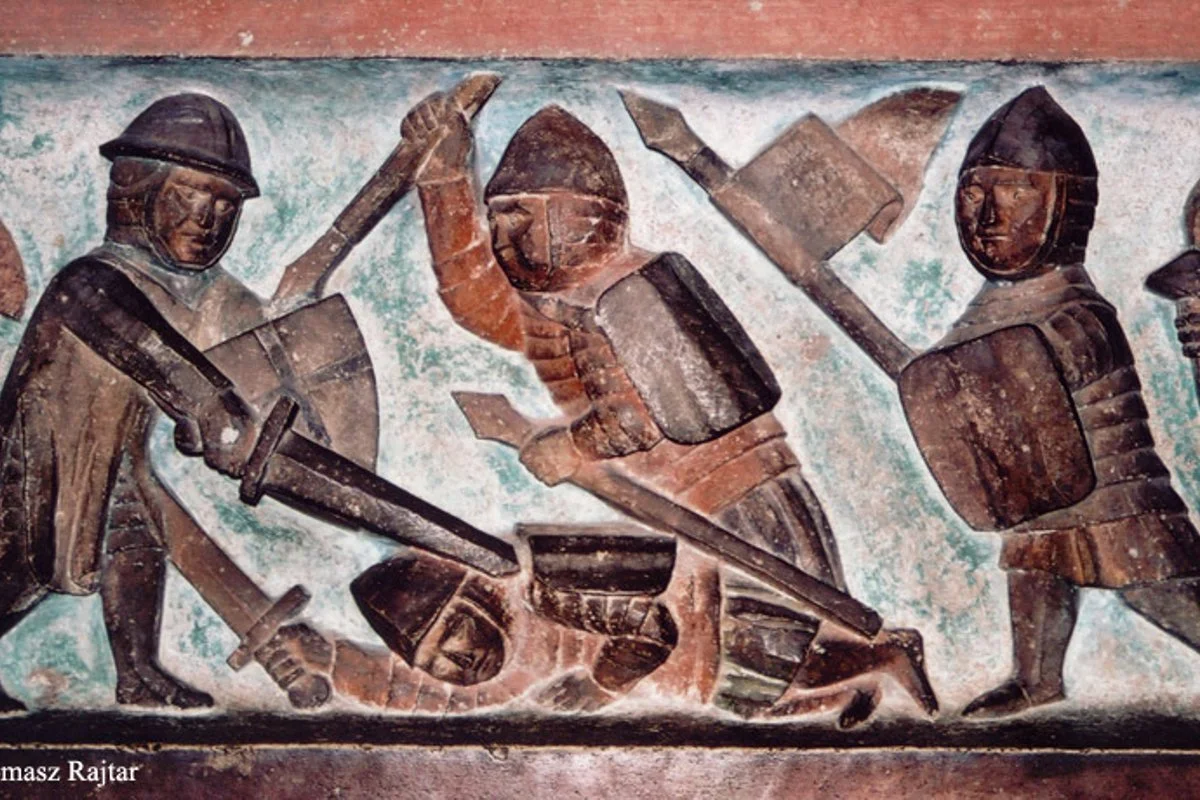
Relief from Marienburg showing German crusaders fighting with Lithuanians
But for our modern, netflix-rotten brains, Vikings = Scandinavians. And the extent of the Scandinavians in Lithuania is very limited.
You might be wondering why that is, because, after all, the Vikings went EVERYWHERE, so why not Lithuania? And a lot of it is down to the geography.
Vikings loved to travel by boat, and are best known for their shallow hulled longboats which could sail over open seas and then be used to row up rivers. This is how the Vikings could strike so deeply into enemy territory. York, Paris and even Kyiv were all on the Viking trail thanks to their presence on rivers. So why did the Vikings not do the same up the Nemunas or Neris into Lithuania?
Well, it’s as simple as those rivers ending up in the vast swamplands of Belarus, not towards new wealthy pastures for expansion and conquering, meaning that modern Lithuania sits on one of the few pockets of ‘safety’ from where the Vikings did end up travelling, both to the North up the Daugava in Latvia and to the South up the Vistula in Poland.
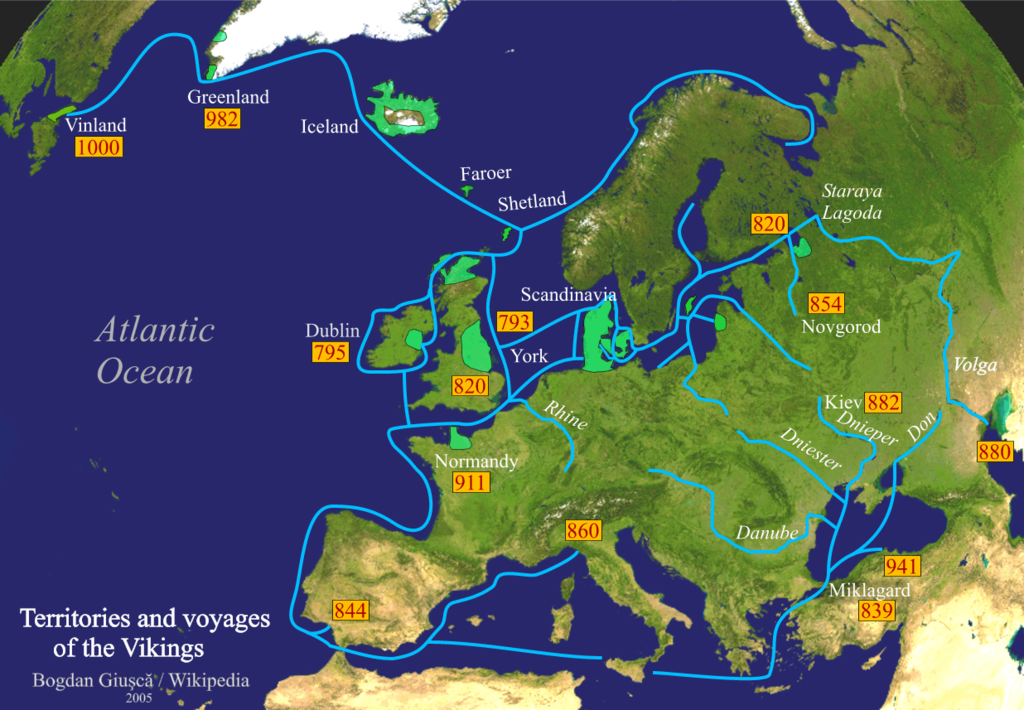
Territories and voyages of the Vikings
But it doesn’t mean the Vikings wouldn’t had a go at exploring the navigable Nemunas or branched off into the Neris towards Vilnius. In fact, one of the most famous Lithuanian folk tales - Eglė the Queen of Serpents has been suggested it could have stemmed from these Viking marauders.
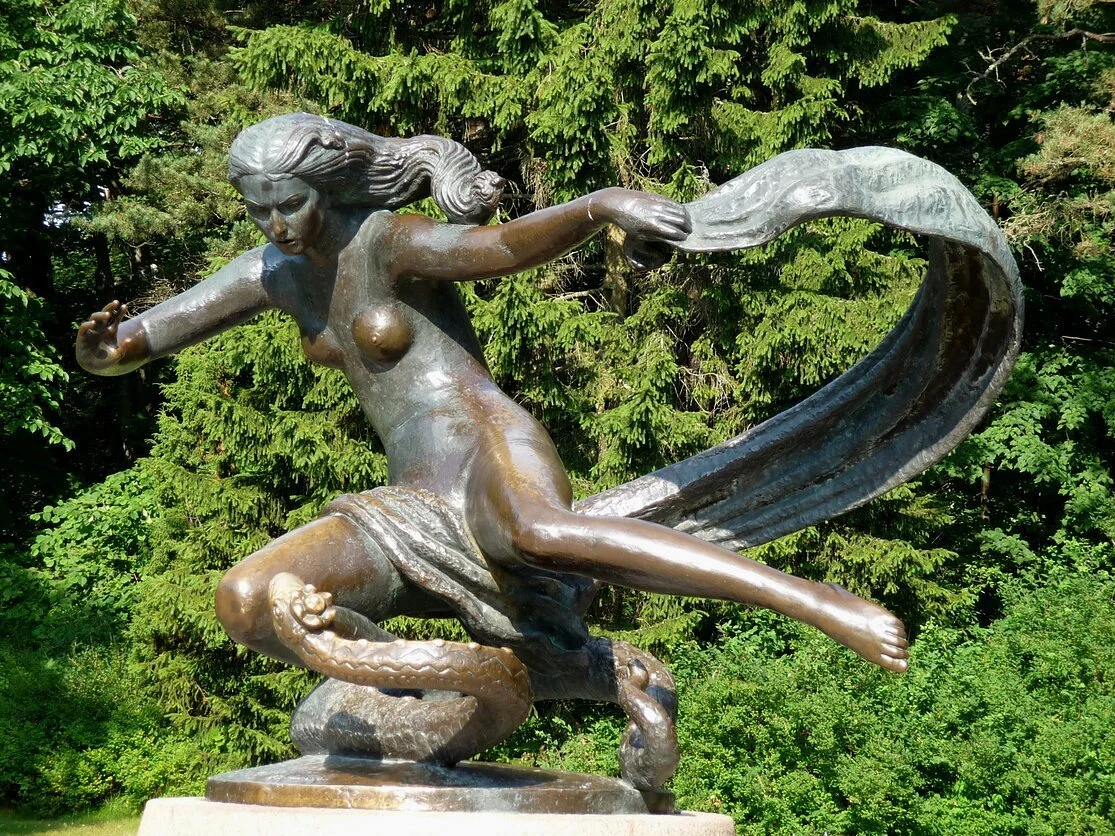
The tale tells of a young maiden named Eglė who discovers a grass snake coiled around the sleeve of her blouse after bathing in a lake with her two sisters. The grass snake demands that Eglė pledge herself to him for the return of her clothing; Eglė relents and agrees to marry.
The story goes that they disappear into the ocean to have many children and only return after 9 years. Through coercion, Eglė’s brothers learn from her children how to call her husband out from the sea, and do so, murdering him in cold-blood.
When a grief-stricken Eglė discovers this, she turns her children into trees: Ąžuolas (Oak tree), Uosis (Ash tree), Beržas (Birch), Drebulė (Aspen), whilst she herself becomes a Spruce.
The vikings were known to come from the sea, and known to symbolise their longship bows with dragons and snakes, so there is, if even the tiniest chance, a chance that this old lore comes from the raids of none others than the Vikings themselves. The tale of Eglė the Queen of Serpents is more common in the Eastern part of Lithuania, which makes even more sense as it was the tribes most cut off from the sea and most likely to mythologise such an event.
Who knows, we leave it to you to decide.. in any case, Lithuanian Viking history is SPARSE.